+380 (97) 062-32-37

Fuel briquettes: RUF, Pini-Kay, Nestro and peat briquettes with delivery

Fuel briquettes delivered across Ukraine: RUF, Pini-Kay, Nestro wood briquettes and peat briquettes. 10 kg packs, 25 kg bags, pallets. Price per pack and tonne.

Briquettes: stock and prices

Found 10 products
Sort by:

Fuel briquettes are a pressed fuel for ordinary solid fuel boilers, stoves and fireplaces, in other words for anyone who loads the firebox by hand. Wood briquettes are made from dry sawdust without any glue: under pressure the wood's own lignin binds the shavings into a dense block. In terms of heat, a tonne of these briquettes replaces 3-4 cubic metres of firewood, takes up four times less space and needs no drying. Peat briquettes are pressed from peat and are the cheapest fuel for long, slow smouldering in a stove or boiler.

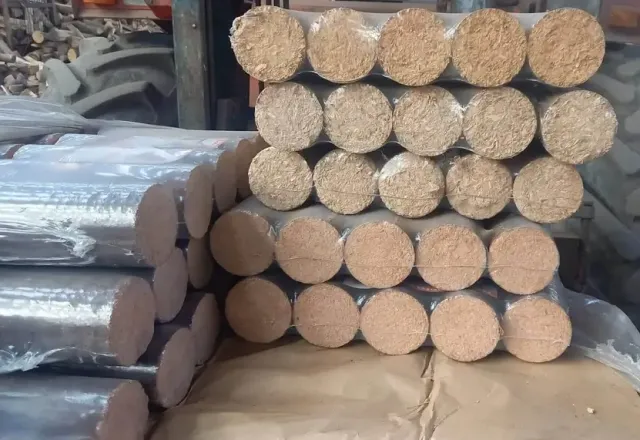
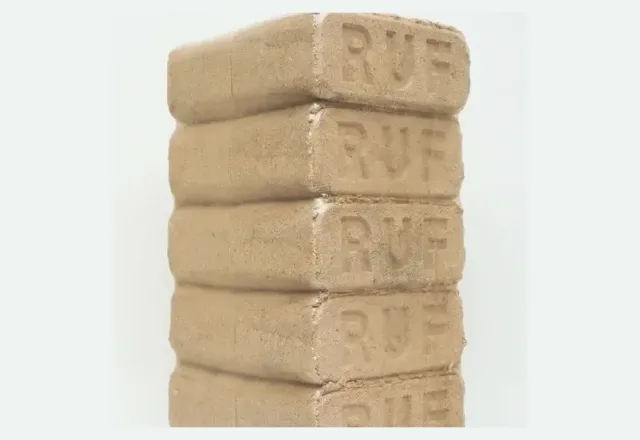
The three types of wood briquettes differ in how they are pressed, and therefore in density and burn time. RUF are rectangular "bricks" from a hydraulic press: the most popular type, easy to stack and portion, burning for 2-3 hours. Pini-Kay are four- or eight-sided logs with a hole in the middle and a scorched surface: the densest, the longest burning and the best at holding embers in a fireplace. Nestro are round cylinders, usually the cheapest per tonne and well suited to boilers. The calorific value of all three is about 4.5-5 kWh per kilogram, roughly the same as wood pellets and twice that of green firewood.

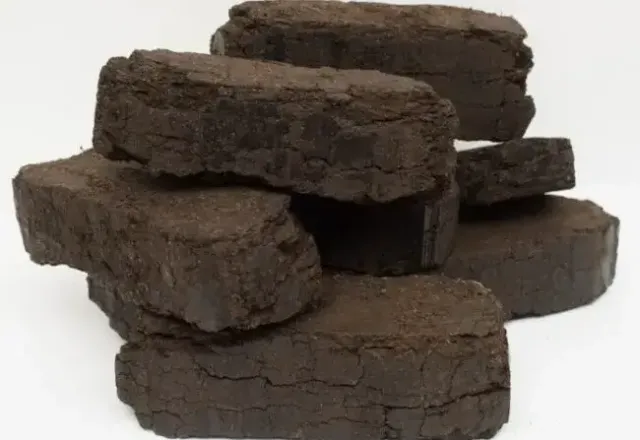
Peat briquettes give about 3.5-4.5 kWh per kilogram, burn without a flame, smoulder for a long time and leave more ash, but cost noticeably less per tonne. They are the option for stoves, potbelly stoves and boilers where a cheap warm night matters more than fast heating.

Packaging. Wood briquettes: 10 kg pack in shrink film, pallet of about 960 kg. Peat briquettes: 25 kg bags, big bag of about 1 tonne, bulk. Prices per pack, per bag and per tonne are in the table below; pallets and bulk give the lowest price per tonne.

Delivery across Ukraine: from our warehouse with our own transport, to other regions by carrier on a pallet. Boiler houses, businesses and dealers get a contract, bank transfer payment with VAT and a quality certificate for each batch.

Price per tonne and per bag - Briquettes

Current prices for fuel briquettes: ruf, pini-kay, nestro and peat briquettes with delivery, updated 01.10.2026. Prices include VAT, delivery not included.
Type / grade Packaging Unit price Price per tonne Note
RUF hardwood 10 kg pack 185 UAH/pack 18 500 UAH
RUF hardwood pallet ~960 kg 14 880 UAH/pallet 15 500 UAH 96 packs
RUF mixed wood 10 kg pack 170 UAH/pack 17 000 UAH
Pini-Kay 10 kg pack 195 UAH/pack 19 500 UAH
Pini-Kay pallet ~960 kg 14 400 UAH/pallet 15 000 UAH
Nestro 10 kg pack 165 UAH/pack 16 500 UAH
Nestro pallet ~960 kg 12 960 UAH/pallet 13 500 UAH
Peat briquettes 25 kg bag 376 UAH/bag 15 040 UAH
Peat briquettes big bag ~1000 kg 11 180 UAH/big bag 11 180 UAH
Peat briquettes bulk 11 180 UAH/t 11 180 UAH for boiler houses

Ask our manager for an exact delivered price to your region: it depends on volume and distance.

Bag → price per tonne

Sellers quote per bag, per pack or per tonne, but offers should only be compared per tonne. Enter the price and weight and we will work out the price per tonne and how many bags make a tonne. It also works the other way: enter a price per tonne to get the bag price.

Per tonne: 40,0 bags of 25 kg.

Formula: price per tonne = bag price ÷ bag weight × 1000.

How many bags per tonne and how much a pallet weighs
PackagingPer tonnePallet
15 kg bag (pellets)66.7 bags65-70 bags ≈ 1 t
25 kg bag (coal, agro pellets, peat)40 bags40 bags = 1 t
30 kg bag33.3 bags-
40 kg bag25 bags-
50 kg bag20 bags-
10 kg pack (briquettes)100 packs96 packs = 960 kg
Big-bag≈ 1 000 kg-

Questions and answers

Which briquettes are better: RUF, Pini-Kay or Nestro?

For a fireplace or stove: Pini-Kay. They are the densest, burn longer and give even heat without sparks. For a boiler: RUF or Nestro. They burn a little faster but are cheaper per tonne and easier to stack. In calorific value all three are close; the difference is mainly in density and burn time. A detailed comparison is in our buyer's guide.

Why are briquettes better than firewood?

Briquettes have a moisture content of up to 10% versus 20-25% for firewood after a year of drying, so you get twice as much heat per kilogram, with less soot and smoke. A tonne of briquettes takes up about 1.5 m³ instead of the 5-6 m³ of firewood needed for the same amount of heat, and there is no chopping or extra drying. The downside: briquettes are sensitive to damp and burn with a smaller flame.

How many briquettes do I need for the winter?

An insulated house of 100-150 m² needs 4-6 tonnes of wood briquettes or 6-8 tonnes of peat briquettes per season; without insulation, about a third more. A kilogram of wood briquettes gives about 4.5-5 kWh of heat, peat briquettes 3.5-4.5 kWh. Call us and we will work out a more accurate figure for your floor area and boiler.

Can I burn briquettes in an ordinary boiler or stove?

Yes, briquettes are designed precisely for manual loading: any solid fuel boiler, stove, fireplace, potbelly stove or sauna stove. Briquettes are not used in a pellet boiler with an auger feed; that is what pellets are for. The only rule is not to pack the firebox full: briquettes expand as they burn.

How should briquettes be stored?

Dry and off the ground: in packs on a pallet under a canopy or indoors. Wood briquettes absorb moisture and fall apart, and peat briquettes go soggy. Shrink-wrapped packs protect against splashes, but not against rain. Stored this way, briquettes keep for several seasons without any loss.

Why did a briquette burn out in 25 minutes when I was promised 3 hours?

Most often it is because the ash door vent was left open. Briquettes are pressed from dry sawdust, and with full air supply they burn like a newspaper: fast and with a big flame. A burn time of 2-4 hours is achieved with the ash door vent and damper partly closed, when the briquette smoulders and releases heat evenly. The second reason is stacking briquettes tightly in a pile: there should be an air gap between them. And the third is a briquette made from damp or loose raw material: it is light, crumbly and burns like wood shavings. Check this with a trial pack before buying a pallet.

Briquettes or firewood in 2026: which is cheaper?

Per tonne, briquettes cost more than firewood, but the right comparison is per kilowatt-hour of heat: a tonne of dry wood briquettes replaces 3-4 stacked cubic metres of firewood. Since market firewood roughly doubled in price in 2025-2026, the difference in cost per unit of heat has almost disappeared, and briquettes win on convenience: no chopping, no year of drying and no need for space to store 6 cubic metres. State firewood under the eFirewood program (ДроваЄ) remains cheaper than briquettes, if you are eligible for it and have somewhere to dry it. A comparison per kilowatt-hour is in the article "Calorific value of different fuels".

Can I order a single pack or bag as a trial?

Yes. We send a trial pack of RUF, Pini-Kay or Nestro (10 kg) or a bag of peat briquettes (25 kg) by Nova Poshta to any city, cash on delivery. You can combine two types in one shipment and compare them in the same stove.

Do I need to pay in advance, and how can I check the weight of a pallet?

We do not take prepayment: you pay the driver on delivery or cash on delivery via Nova Poshta, and businesses pay by bank transfer with VAT under a contract. A pallet holds 96 packs of 10 kg, i.e. about 960 kg; you can weigh any pack in front of the driver and count the packs. If the weight is short or packs are missing, we will make up the difference or refund it.

A 10 kg pack: how much is that per tonne?

There are 100 packs of 10 kg in a tonne, so pack price × 100 = price per tonne in packs; a pallet is 96 packs, about 960 kg. A pack at 120 UAH works out at 12,000 UAH per tonne. Compare offers exactly this way, because some sellers quote per pack and others per tonne or per pallet. The "Bag → price per tonne" converter on this page works both ways.

Before you buy: guides

All guides →

How to choose briquettes: a quick guide

  1. What you are heating. Fireplace, tiled stove or stove with a visible fire: Pini-Kay. They burn for a long time, keep their shape and do not spark. Boiler: RUF or Nestro. They are cheaper per tonne, burn with a good flame and reach temperature quickly. Stove or boiler where you need cheap heat all night long: peat briquettes.
  2. Wood species. Hardwoods (oak, ash, beech) are denser, burn longer and leave less ash; blends with softwood are cheaper and catch fire faster. In a fireplace the difference is noticeable, in a boiler it is mostly in the price.
  3. What you can see without a lab. A good briquette is heavy and dense, with a smooth surface; it does not crumble in your hands and leaves no sawdust at the bottom of the pack. Cracks, delamination and low weight are signs of damp raw material or a weak press.
  4. Price per tonne. Compare offers per tonne, not per pack: a pack may hold 10, 12 or 15 kg. A pallet is the best-value way to stock up for the season with delivery to your gate.
  5. Documents. Ask for a quality certificate for the batch: moisture, ash content, calorific value. We provide it together with the delivery note.

For wholesale buyers and boiler houses

Batches from 5, bank transfer with VAT, a contract and fuel documents. Delivery across Ukraine.