
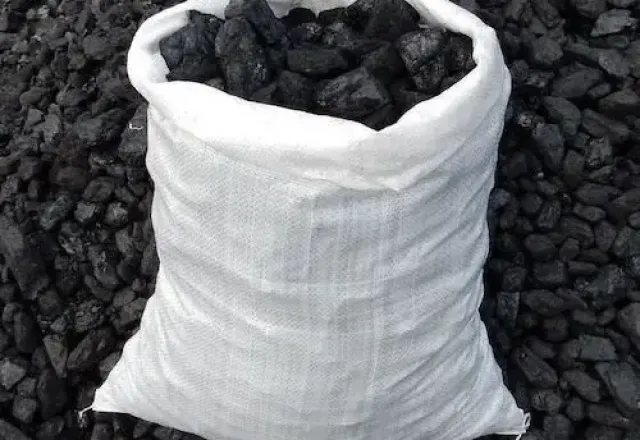
Bags or bulk: which pays off when
Bulk coal is always cheaper per tonne because you do not pay for bagging, the pallet and the stretch film. But bulk needs a dry covered area that a tipper truck can reach, and a few hours of shovelling. Bags win if you use up to 2 tonnes a season, live in a town or a densely built-up area where a bulk truck cannot get through, or want to dose each load precisely and keep the fuel clean. For boiler houses using 3-5 tonnes or more, and for farms with their own storage, big bags and bulk make more sense.
How to check a bag on delivery
Weigh any bag on household scales in front of the driver: graded coal should weigh 25 kg, with a tolerance of about half a kilo. Tip one bag out onto a flat surface: the lumps should be of one size fraction, with no more than a tenth fines and dust, and no grey or brown lumps of rock. Anthracite is glossy and does not dirty your hands; long-flame coal is matt and layered. If you are unsure about the grade, we send the batch test report with ash content, moisture and calorific value on request before payment.
How many bags you need for the winter
An insulated house of 100-150 m² needs 3-5 tonnes of anthracite (120-200 bags) or 4-6 tonnes of long-flame coal (160-240 bags) per season. That is 3-6 pallets. The calculator on this page gives a more precise figure for your floor area, insulation and region. If you need a large stock, it is cheaper to take part of it in bulk and keep the bags for lighting up and for the coldest weeks.
How to store bags
On a pallet under a canopy or in a shed, not on the ground and not in the open. Coal is not as sensitive to moisture as pellets, but wet bags freeze together in winter, and water in a bag of anthracite makes it harder to light. A polypropylene bag keeps water out, so a short shower will do no harm, but standing water under the pallet will. Stored this way, bagged coal keeps for years.